
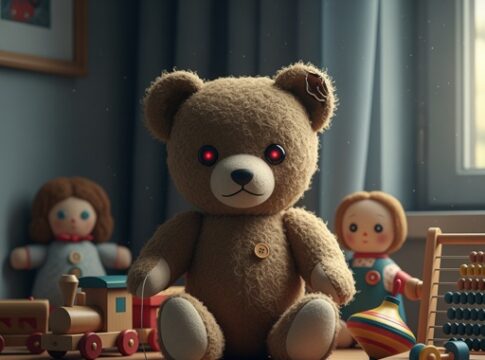
Parents are being warned that a trendy new children’s toy could turn playtime into a life‑threatening emergency long before regulators ever step in.
Story Snapshot
- Health and safety groups say small toy parts, cords, batteries, and magnets can cause choking, strangulation, or internal injuries that may lead to death if not caught in time.[4][6][8]
- Pediatric hospitals report that toy injuries send children to emergency rooms every few minutes, with the youngest kids facing the highest risks.[3][5]
- Regulators can ban or recall toys with known hazards, but many risks are only discovered after children get hurt.[4][7][8]
- Both conservatives and liberals see toy safety as another example of a federal system that reacts slowly while families are left to protect themselves.[4][7]
Why this toy warning hits a nerve with parents
Parents across the country are seeing headlines about a “dangerous children’s toy” that could cause severe injury or even death, and they are asking a fair question: how did this toy reach store shelves in the first place. Long before this specific alert, child-safety experts warned that small toy parts can lodge in a child’s windpipe and block breathing within seconds.[1][4] Health guidance tells parents that if they doubt a toy’s safety, they should keep it away from young children.[1]
Medical data shows toy injuries are not rare flukes but a steady stream of harm. Nationwide Children’s Hospital reports that a child or teen is treated in a United States emergency room for a toy-related injury every few minutes, and more than half of these cases involve children younger than five.[3] For many families, this turns a simple purchase into a serious gamble, especially when flashy marketing hides basic safety details that matter most to parents.[3][5]
What we know – and do not know – about this “dangerous toy”
The current warning claims this toy could cause “severe injury or death,” yet the public evidence so far is mostly broad toy-safety guidance, not a detailed case file for this one product.[1][4][5] The record does not include a specific recall notice, hospital case series, or regulator report naming this toy and describing exactly what went wrong.[9] That gap matters because a real hazard can exist, but the public is being asked to trust headlines without seeing the underlying proof.[9]
Regulators like the United States Consumer Product Safety Commission treat toys with small parts for children under age three as banned hazardous substances when they can cause choking or ingestion.[4] Health Canada requires that small eyes and noses on plush toys be firmly attached so they cannot be pulled off and swallowed.[2] These rules show that the risk is real and well known, but they do not by themselves prove that this one toy failed testing or caused documented injuries.[2][4]
How toys actually hurt kids in the real world
Pediatric hospitals and safety groups describe a grim but clear pattern. Children choke when tiny pieces, balls, or broken parts block their airway, sometimes with fatal results.[4][5][9] Strings, cords, and straps can wrap around a child’s neck and cut off breathing, especially in infants and toddlers.[2][6] Toys that shoot darts or other projectiles can seriously injure the eyes, which is why some doctors suggest safety glasses for certain shooting toys.[5] These are not movie-style freak accidents; they show up again and again in injury reports.[3][5]
Newer risks involve batteries and magnets hidden inside cute plastic shells. Seattle Children’s Hospital warns that button or coin batteries can burn a child’s throat or stomach from the inside if swallowed.[6] The same hospital notes that if a child swallows two or more magnets, they can stick together through the intestinal wall and cause tears, infection, or death without quick surgery.[6] Safety advocates also track recalls where toys are pulled for choking hazards that regulators say could cause serious injury or death.[7][8]
Why both the left and right distrust the system on toy safety
Conservative parents see stories like this and recognize a familiar pattern: big companies chasing profit, lobbyists shaping weak rules, and a federal government that talks tough after the damage is done.[4][7] Liberal parents look at the same pattern and see corporations cutting corners at the expense of children’s health while regulators lack the staff and will to police thousands of products flooding stores and online markets.[7][8] Both sides notice how long it can take before a clearly unsafe item is recalled or even investigated.[4][8]
Safety groups like World Against Toys Causing Harm describe their entire mission as warning families about dangerous products that should never have reached kids’ hands in the first place.[6][7] At the same time, experts admit that many media stories lean on worst-case language like “could kill your child” without showing hard numbers for that exact toy.[9] Parents are left in the middle, trying to decode labels, follow age ratings, stay on top of recalls, and still somehow let their kids enjoy being kids.[1][3][5]
How parents can respond when the system feels broken
Child-safety guidance offers some practical steps while Washington argues and industry points fingers. Parents are urged to follow age labels, avoid any toy with small parts for children under three, and test suspicious items with a cardboard toilet paper roll to see if they pose a choking risk.[1][5] Experts say to watch for loose eyes or noses on stuffed toys, long cords, weak battery covers, and cheap plastic that snaps into sharp pieces.[2][5][6]
Doctors and regulators also stress that supervision is still the most important safety tool. Children’s Hospital of Philadelphia says most toy injuries happen when toys are misused or when kids play without an adult nearby.[5] The U.S. Consumer Product Safety Commission advises checking recall lists and throwing away broken, damaged, or unlabeled toys rather than handing them down.[4][8] None of this fixes a federal system that many see as captured by elites, but it does give parents a fighting chance while the bigger battles over safety, profit, and responsibility continue.[3][4][6]
Sources:
[1] Web – Parents warned over ‘dangerous children’s toy’ which can cause ‘severe …
[2] Web – Choosing Safe Toys for Toddlers and Preschoolers – Kids Health
[3] Web – Industry Guide to Health Canada’s Safety Requirements for …
[4] Web – Toy Safety – Nationwide Children’s Hospital
[5] Web – Small Parts Ban and Choking Hazard Labeling | CPSC.gov
[6] Web – Toy Safety – Seattle Children’s Hospital
[7] Web – World Against Toys Causing Harm, Inc. (W.A.T.C.H.)
[9] Web – Top Hazardous Toys and Their Defects | Buckeye Law Group