
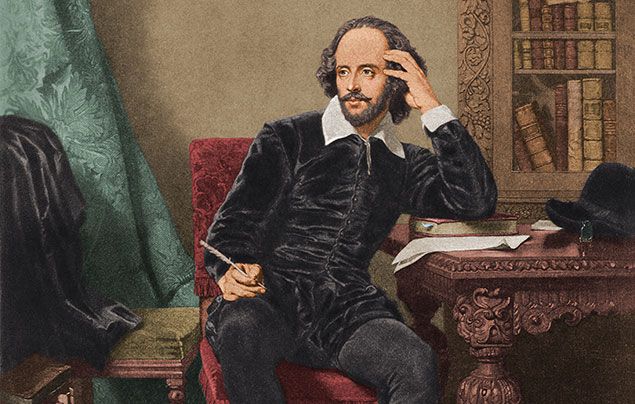
Scholars have pinpointed William Shakespeare’s long-lost London house after 360 years, revealing he likely stayed in the city longer than thought, penning final plays mere steps from the theater.
Professor Munro Uncovers Hidden Map
Professor Lucy Munro of King’s College London found three archival documents during research on local playhouses. Two came from The London Archives, one from The National Archives. The key piece, a 1668 Blackfriars precinct plan drawn post-Great Fire, detailed Shakespeare’s property. This map showed an L-shaped structure, 45 feet wide east-west and 13-15 feet on ends. Munro realized its significance instantly, stating she couldn’t believe she held Shakespeare’s floorplan.
Shakespeare Purchases Blackfriars Property in 1613
William Shakespeare bought the property in 1613 near Blackfriars Theatre, which he part-owned. Blackfriars precinct originated as a 13th-century Dominican friary, repurposed after Henry VIII dissolved monasteries. The gatehouse location offered strategic access. Historians knew of the purchase but lacked precise details for centuries. The house vanished in the 1666 Great Fire, erasing physical traces and fueling mystery.
Elizabeth Hall Nash Barnard, Shakespeare’s granddaughter, sold it in 1665. Modern sites host businesses like architecture firms and wholesalers. The 19th-century blue plaque at 5 St Andrew’s Hill read “near this site” due to uncertainty. Now confirmed exact.
Property Details and Architectural Insights
The map depicts the dwelling carved from medieval monastery remains, partly over the gatehouse. Large enough for two homes, it hints at rental income or family use aligning with Shakespeare’s wealth from plays. Proximity to theater—a five-minute walk—fits his active involvement. This scale contradicts full retirement narratives, suggesting ongoing London ties grounded in common sense property investment.
Sources note uncertainty if Shakespeare resided there or rented it out. Yet facts—size, location—support personal use during final years. Munro’s evidence strength outweighs prior assumptions, resonating with conservative values of self-reliance through savvy real estate.
Revising Shakespeare’s Final Years Narrative
Traditional views place Shakespeare in Stratford-upon-Avon, 100 miles northwest, building a family home with play profits. He died there in 1616 at 52. This discovery implies more London time, possibly collaborating with John Fletcher on Henry VIII and The Two Noble Kinsmen. Munro proposes he worked from the house, reshaping biographical understanding based on archival proof.
King’s College disclosed findings April 15, 2026; media covered April 16. Scholars gain precise geography, tourists a landmark. Long-term, expect site probes and narrative shifts. Archival work proves vital for history.
Exact location of Shakespeare’s ‘missing’ home finally discovered Curiosities about the exact location of the unparalleled playwright’s “missing” London home have persisted for centuries, forcing fans and researchers alike to give up the hunt. https://t.co/6CidVCJoWQ pic.twitter.com/n5842ffao8
— UnfilteredAmerica (@NahBabyNahNah) April 16, 2026
Current buildings at Ireland Yard’s east end, Burgon Street bottom, 5 Burgon Street, and 5 St Andrew’s Hill overlay the site. Public now knows Shakespeare’s London footprint, elevating Blackfriars heritage.
Sources:
New discovery solves mystery of the location of Shakespeare’s London house
Shakespeare’s long-lost London house found with newly discovered map
Shakespeare’s ‘missing’ London house mapped with new discovery
Shakespeare’s long-lost London home is finally found
New discovery solves mystery of the location of Shakespeare’s London house