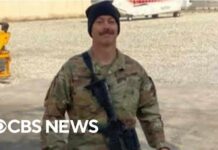
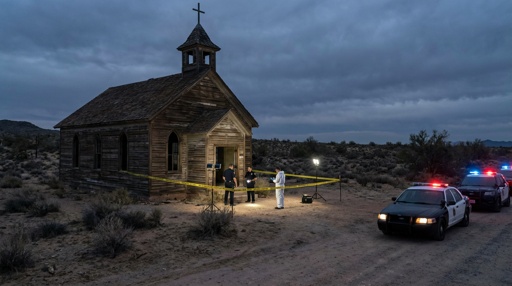
A beloved character actor from “Top Gun: Maverick” is dead in a Los Angeles suburb, and police say the suspected killer is his girlfriend’s own son.
Story Snapshot
- Veteran actor James Handy, known for “Top Gun: Maverick,” was fatally stabbed in his Tarzana home, according to Los Angeles police.[3][4][1]
- Police say a 911 caller declared, “I am the son of man, I just killed the man of sin,” moments after the stabbing.[1]
- Officers identified the suspect as the 44‑year‑old son of Handy’s girlfriend; detectives are treating the case as a murder investigation handled by the Robbery‑Homicide Division.[1][4]
- The case highlights growing fears about violent crime in America’s cities and the way sensational narratives can outrun hard evidence.[1][4]
Veteran actor killed in his own home
Los Angeles police say 81‑year‑old actor James Handy, recognizable to many conservatives from “Top Gun: Maverick” and other classics, was found fatally stabbed inside a Tarzana residence in the city’s West Valley area.[4][3] Detectives stated that officers responded to reports of an assault with a deadly weapon and discovered Handy suffering from multiple stab wounds.[4] He was pronounced dead at the scene, turning a quiet neighborhood home into the center of an unfolding murder investigation.[4]
Local reporting identifies Handy as a long‑time working actor who appeared in films such as “K‑9,” “Arachnophobia,” “Jumanji,” “Unbreakable,” “Logan,” and most recently as Jimmy in “Top Gun: Maverick.”[3] For many readers, his face is instantly familiar even if his name is not, the kind of steady American character actor who helped shape the backdrop of movies they enjoyed with their families. That makes the brutality of this killing feel especially personal.[3]
Girlfriend’s son named as suspect amid chilling 911 quote
According to a detailed local television news report, police identified the suspected attacker as 44‑year‑old Michael Gledhill, the son of Handy’s girlfriend.[1] Reporters say investigators told them Gledhill later turned himself in on suspicion of murder after the stabbing.[1] That family connection—trusted loved one, then alleged killer—underscores how danger can come from inside the home, not just from the unknown criminal on the street. It also raises serious questions about mental health and warning signs.[1]
The same report quotes police describing a deeply disturbing 911 call placed after the attack.[1] According to officers, the caller said, “I am the son of man, I just killed the man of sin,” words that sound more like something from a dark thriller than a real emergency call.[1] Authorities have not publicly released the full audio or a certified transcript, so the public only has this single reported line, without tone, context, or confirmation on whether the caller was Gledhill himself.[1] That gap matters in any system that values due process and truth.
Police frame the case as murder, but records remain limited
The Los Angeles Police Department’s own newsroom release labels the case a “Murder Investigation in West Valley Area,” a phrase that signals detectives believe Handy’s death was intentional homicide rather than accident or self‑defense.[4] The notice explains that the Robbery‑Homicide Division, Valley Bureau Section, is handling the case, which usually means investigators view it as serious, potentially high‑profile violent crime.[4] However, the release does not name a suspect, describe the 911 call, or lay out specific evidence tying any individual to the killing.[4]
This mismatch—strong language about murder, but sparse public documentation—illustrates a recurring problem conservatives have long flagged in criminal justice coverage.[1][4] Early narratives often rely heavily on police sound bites and dramatic details, such as the “son of man” quote, before the full record is available.[1] Without access to the 911 audio, probable‑cause affidavits, or court filings, citizens are left to sort through fragmented facts and sensational headlines, while still trying to honor both the victim’s memory and the presumption of innocence.[1][4]
Crime, media narratives, and what this means for families
For many readers who respected James Handy’s work and love their own families, this story lands on two levels: the grief of a senseless killing and the concern that violent crime continues to haunt American cities.[4][1] Tarzana is not some war zone; it is a residential suburban area of Los Angeles, the kind of place where people expect to retire, not be murdered.[4] When violence reaches into those neighborhoods, it reinforces long‑standing conservative concerns about public safety and the real‑world cost when the justice system fails to deter crime.[1][4]
TOP GUN MAVERICK ACTOR JAMES HANDY MURDERED BY GIRLFRIEND'S SON
James Handy, known for his role in Top Gun: Maverick, was killed by his girlfriend's son in a shocking domestic incident.
🔹 Chilling 911 call details emerging as police investigate.
Hollywood keeps delivering… pic.twitter.com/O145W9dM0x
— CHItrader (@CHItrader) June 5, 2026
At the same time, conservatives recognize the danger of letting viral headlines replace evidence. Limited transparency from homicide investigations and the lack of immediate access to 911 recordings, body‑camera footage, and full court records can make it hard for citizens to get the whole story.[1][4] Responsible Americans want both: tough enforcement that protects innocent people like Handy, and a justice process grounded in facts, not just the most dramatic line from a single phone call.[1][4]
Sources:
[1] Web – ‘Top Gun: Maverick’ actor James Handy murdered by girlfriend’s son as …
[3] Web – Suspect Charged, Wanted in Fatal Shooting at 7510 Burgoyne Road
[4] Web – Murder Investigation in West Valley Area NR26123ag – LAPD Online