
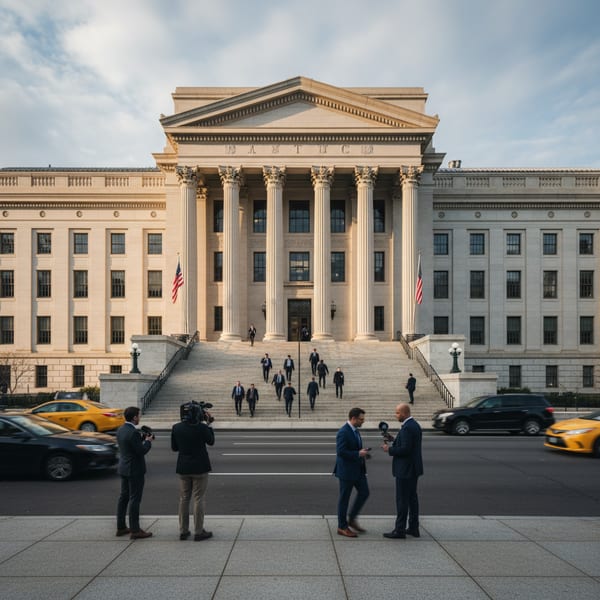
The Trump Justice Department commits to enforcing the Supreme Court’s latest ruling against racial gerrymandering across all 50 states, potentially forcing multiple states to redraw congressional maps before the November elections.
Justice Department Takes Action
Assistant Attorney General Harmeet Dhillon announced Thursday that the DOJ will aggressively enforce the Supreme Court’s decision banning race-based redistricting. Responding to Senator Eric Schmitt of Missouri, Dhillon declared the department is committed to equal protection under the law for all Americans. Acting Attorney General Todd Blanche’s team will use full federal authority to stop states from continuing race-based map-drawing practices that have shaped congressional districts for years.
Schmitt pressed the Justice Department to act swiftly, stating that federal officials clearly possess the power to intervene when states create districts based primarily on racial demographics. The Missouri senator emphasized the importance of enforcing what he called a color-blind Constitution, urging the department to undo previous race-based redistricting decisions. Dhillon confirmed the DOJ under Blanche will prioritize equal protection in employment, housing, education, and voting rights across the board.
🚨BREAKING: Assistant Attorney General Harmeet Dhillon has just sued Idaho for refusing to turn over its full statewide voter registration rolls.
Idaho provided a redacted/scrubbed version, but the DOJ demanded the complete, identifiable records. pic.twitter.com/q2BkFQHRDF
— The Patriot Oasis™ (@ThePatriotOasis) April 1, 2026
Supreme Court Strikes Down Louisiana Maps
The Supreme Court ruled Wednesday that Louisiana exceeded legal boundaries by creating a second majority-Black congressional district based primarily on race rather than traditional redistricting principles. The decision establishes a nationwide standard that could affect congressional maps in multiple states, from Louisiana to California. States relying on racially gerrymandered districts will likely face pressure to redraw boundaries, removing uncertainty over House control ahead of fall elections.
Political Reactions and Implications
Former President Barack Obama criticized the Supreme Court decision, claiming it undermines the Voting Rights Act by allowing state legislatures to dilute minority voting power under the guise of partisan rather than racial redistricting. The ruling marks a significant shift in how congressional districts can be drawn, potentially affecting both major political parties’ strategies. The enforcement effort could reshape the electoral map before voters head to the polls this November, as the Justice Department works to ensure compliance with the Court’s color-blind standard nationwide.