
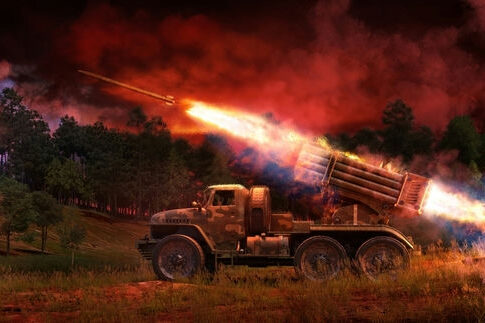
As Hezbollah rockets arc toward Israeli towns yet again, one question should alarm every American: who is really standing firm against terror, and who is still pretending Iran’s proxies can be “managed” with paper ceasefires?
Story Snapshot
- Israel says it intercepted rockets fired from Lebanon and hit Hezbollah sites in south Lebanon in response.[1][2]
- Hezbollah denies launching some of the rockets, even as it keeps thousands of missiles aimed at Israeli civilians.[3]
- Lebanese officials claim Israeli strikes break ceasefire terms, while Israel says Lebanon must control terrorists on its soil.[2][3][4][5]
- Years of failed “peace processes” and Iran-backed militias show why conservatives distrust globalist deals and demand real deterrence, not wishful thinking.
Hezbollah Rockets, Israeli Intercepts, And A Ceasefire On Life Support
Israeli officials say rockets were launched from southern Lebanon toward northern Israel, triggering air raid sirens and sending families running for shelters near the border.[4][5] Israel’s army reports that its air defense systems, including the Iron Dome, intercepted incoming projectiles before they could hit populated areas.[4][9] In one recent clash, three rockets were intercepted above the town of Metula, with no reported casualties, yet the attack marked the heaviest fire since a fragile ceasefire began.[2] After the interceptions, Israel struck what it described as Hezbollah rocket launchers and a command center in southern Lebanon, saying the targets were used by militants planning and firing attacks into Israel.[2][5] These tit-for-tat exchanges are not new but show how thin the current ceasefire really is along the Israel–Lebanon border.[3]
Reports from Reuters and other outlets note a common pattern: a rocket or salvo fired from Lebanon, an Israeli interception, and then Israeli strikes on Hezbollah-linked sites in southern Lebanon or even in Beirut’s southern suburbs.[1][2][5][6] Lebanon’s state media often reports the strikes and resulting casualties but stresses that there was “no immediate claim of responsibility” for the rockets that triggered them.[1][4][5] Israel’s government counters that Hezbollah and other Iran-backed factions have a long history of using south Lebanon as a launchpad, hiding mobile launchers in residential areas and near villages to shield themselves behind civilians. For Israeli leaders, these recent attacks prove that deterrence, not more one-sided restraint, is the only language Hezbollah understands.[2]
Hezbollah Denials, Lebanese Politics, And Fog Of War
Hezbollah officials deny they fired at least some of the rockets that Israel intercepted, claiming they had “no link” to those launches and were still respecting the ceasefire.[3][5] Lebanese authorities say their army has at times found and dismantled rocket launchers after attacks, but they admit they often cannot clearly identify who used them and are still “investigating” the origin of specific barrages.[5] Lebanese leaders accuse Israel of using these unclear rocket incidents as a pretext for deeper strikes in Lebanon, including on border hills and urban areas up to several miles inside the country.[1][5] At the same time, they insist that only the Lebanese state, not militias, should decide questions of war and peace, even though Hezbollah keeps a large independent arsenal and armed forces that rival the national army.[2][3] This internal split lets Hezbollah operate while politicians in Beirut blame Israel and call on the United Nations for more pressure on Jerusalem instead of disarming Iranian-backed fighters on their own soil.[2][5][6]
For conservatives watching from the United States, this script sounds familiar: a terror group backed by Iran fires or threatens attacks, then hides behind claims of “deniability” and “ceasefire,” while international voices scold the country that responds in self-defense. Data from security researchers show that since 2000, more than fifteen thousand projectiles have been fired from Lebanon into Israel, with Hezbollah responsible for most of them. During the 2006 Lebanon War, Hezbollah launched an average of about 130 rockets a day, often from mobile launchers hidden near homes in cities like Tyre, making it very hard to track each launch team after the fact. Since October 2023, Hezbollah and allied groups have fired at least twelve thousand four hundred rockets at Israel, even as Israel says it has destroyed about eighty percent of Hezbollah’s rocket and missile stockpiles. That track record makes the group’s sudden denial of specific launches ring hollow to many observers who have watched this border for decades.
Why This Matters For American Conservatives And U.S. Policy
These clashes on Israel’s northern frontier expose the failure of a globalist mind-set that trusts ceasefires and “understandings” with terror sponsors more than hard power and clear red lines. Ceasefire deals with Hezbollah promised that the group would remove weapons from southern Lebanon and that the Lebanese army would take full control, while Israeli forces would withdraw from key positions.[3][4] Yet both sides now accuse the other of breaking those terms, and reports say Hezbollah still holds armed positions in the south, while Israel keeps some border outposts and conducts airstrikes on threats it identifies.[3][4][5] This is exactly what happens when international agreements do not come with real enforcement and when Iran’s network of proxies is allowed to keep its weapons while pretending to be a “political movement.” For American readers who care about strong borders and national defense, the lesson is clear: a country under constant rocket threat must reserve the right to intercept incoming fire and hit back at the launchers, even if foreign critics complain.[2]
Weekly Report – Hezbollah Attacks Against Israel (8–14 June)
Key Trends This Week
During the past week (8–14 June), Hezbollah carried out 134 attack waves against Israel and IDF forces, a decrease compared to the previous week (1–7 June), during which 198 attack waves were… pic.twitter.com/UlayOgDENT— Israel-Alma (@Israel_Alma_org) June 15, 2026
Events in Israel and Lebanon also connect back to core concerns here at home. Iran-backed militias testing Israel’s defenses look a lot like other bad actors who test America’s resolve when they see weakness in Washington. When past U.S. leaders chased paper deals with Tehran, cut defense budgets, or treated terror groups as “partners,” they encouraged more rockets, more drones, and more aggression across the region. Under President Trump’s second term, the United States has taken a different line, backing Israel’s right to defend itself and pushing back on Iran’s reach instead of funding it. For conservatives who value secure borders, strong militaries, and moral clarity, the situation on the Israel–Lebanon border is a warning: you cannot appease groups that fire on civilians and then deny it the next day. You confront them, you support allies who fight them, and you stay wary of any “deal” that leaves terrorists armed and free while blaming the country that dares to shoot down the rockets.
Sources:
[1] Web – Israel says intercepts Hezbollah rockets, conducts strikes in south …
[2] Web – Israel pounds south Lebanon after intercepting rockets, Hezbollah …
[3] Web – Israel hits Hezbollah targets after intercepting rockets from Lebanon
[4] Web – Israel intercepts rocket from Lebanon, Hezbollah denies involvement
[5] Web – Israel intercepts rockets from Lebanon, retaliates with strikes – The …
[6] Web – IDF strikes Hezbollah sites after rockets intercepted, Lebanon warns …
[9] Web – Israeli army claims to have intercepted 3 rockets fired from Lebanon