
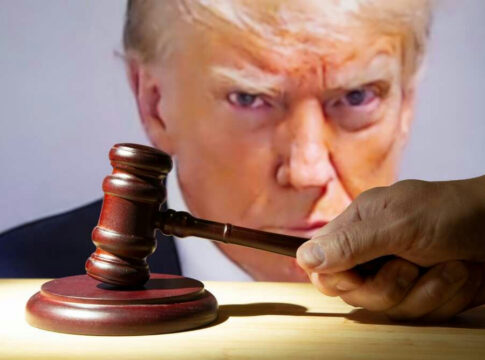
Trump’s legal team is pushing back hard, telling a federal judge there is “no evidence” of collusion or fraud in a billion‑dollar settlement that critics call a sham deal Trump made with his own government.
Story Snapshot
- Trump’s lawyers tell a federal judge there is “no proof” of collusion or fraud in his IRS settlement.
- The deal created a $1.776 billion Anti‑Weaponization Fund and helped resolve Trump’s personal tax‑leak lawsuit against the government.
- Dozens of former judges and left‑leaning watchdog groups claim the settlement is “collusive” and a “fraud on the court.”
- The Justice Department has now backed away from the fund, but the core legal fight over presidential power and “weaponization” is just beginning.
Trump’s “Settlement With Myself” Becomes the Latest Battlefield
In the case known as Trump v. Internal Revenue Service, President Trump sued over the leak of his tax returns by an Internal Revenue Service contractor, arguing his privacy and rights were violated.[1] The agency he sued is one he oversees as president, which led Trump himself to jokingly describe the situation as “settling with myself.”[1] That unusual posture gave Trump’s opponents a talking point, but it does not by itself prove any crime or collusion. At its core, it is still a lawsuit over an unlawful leak of private tax data, something any taxpayer would be furious about.
Trump’s lawsuit demanded major damages from the federal government, reportedly as high as $10 billion, for the leak and related government actions tied to the Mar‑a‑Lago search and the original Russia probe. Instead of a direct payout to Trump, the Justice Department announced a settlement that created a $1.776 billion “Anti‑Weaponization Fund” paid from the existing Judgment Fund, a standing Treasury account used to pay settlements.[5][6] Trump agreed to drop his case with prejudice, meaning he cannot refile, and to withdraw related administrative claims.[6] His camp frames this as turning his personal grievance into relief for others who faced political “lawfare.”
What Trump’s Lawyers Are Arguing in Court
In a brief to U.S. District Judge Kathleen Williams, Trump’s private attorneys—led by Alejandro Brito—flatly state there is “no proof” of “collusion or fraud” in the way the settlement was reached.[1] They argue the Justice Department reached “a fully appropriate government settlement” based on the merits of Trump’s claims and the cost of defending the case, just as it would in thousands of other matters each year.[1] The lawyers stress that no government attorney ever even filed an answer or motion in the case before the settlement, calling that a litigation choice, not a sign of a secret plot.[1]
The legal team also insists the legitimacy of the settlement does not depend on the court keeping control of the case after Trump dismissed it.[1] In their view, once the government agrees to a settlement and uses lawfully available funds, a judge does not have to sign off for the executive branch to resolve its own disputes.[1] They reject claims that the deal’s scope—like covering past audits or related claims—proves wrongdoing, saying broad releases are common in civil settlements. For Trump supporters who see years of partisan investigations, that argument fits a larger demand: end the “weaponization” and move on.
How the Anti‑Weaponization Fund Was Structured and Sold
The Justice Department’s own press release described the Anti‑Weaponization Fund as a way to “hear and redress claims” from people who suffered government weaponization and lawfare.[6] The fund would receive $1.776 billion from the Judgment Fund, not a new appropriation, and would be run by a five‑member commission appointed by the Attorney General, with one member chosen in consultation with congressional leaders.[6] It could offer apologies and monetary relief to claimants, and any leftover money would return to the federal government when the fund shuts down.[6]
Trump and his sons were to receive a formal government apology but “no monetary payment or damages of any kind” under the deal, something top Democrats later highlighted even as they warned that Trump‑aligned individuals and entities were not barred from getting payouts.[6] The structure let the administration say it was not lining Trump’s own pockets, while still addressing the tax leak, the Mar‑a‑Lago raid, and the Russia investigation as examples of past “weaponization.”[6] For many conservatives who watched the Internal Revenue Service and Federal Bureau of Investigation target political opponents for years, that idea resonated as long‑overdue accountability.
Why Critics Call It Collusive, and Why the Case Was Reopened
Left‑leaning watchdog groups and some legal commentators immediately branded the fund a “slush fund” and a classic case of self‑dealing, arguing Trump used a friendly Justice Department to drain almost $2 billion in taxpayer money for his allies.[2] Two federal lawsuits filed May 22 ask courts to dismantle the fund, saying it lacks clear approval from Congress, ducks normal rulemaking, and places spending power in a commission insulated from public oversight.[4] One complaint calls it a “lawless Fund” born of “a collusive agreement between the President and his own administration.”[4]
Dozens of former federal judges then took the rare step of filing a motion in Trump’s case, accusing the settlement itself of being “a product of collusion and a fraud on the court.”[5][6] They argue Trump was effectively on both sides of the “v.” because the Justice Department, which should have defended the Internal Revenue Service, ultimately answers to the president.[5][6] Judge Kathleen Williams agreed to reopen the case and ordered Trump’s lawyers to respond to these claims, giving critics a live forum to attack the deal.[5] That move does not prove fraud, but it does show the judiciary is uneasy with how far executive power may have stretched.
Justice Department Pulls Back as the Constitutional Fight Grows
Under mounting political and legal fire, Acting Attorney General Todd Blanche told lawmakers the Justice Department would not move forward with the Anti‑Weaponization Fund, saying flatly, “We are not moving forward with the fund, period.”[5] This reversal came after bipartisan outcry that included concerns about separation of powers—Congress appropriates funds, not the president—and worries that the fund could reward January 6 defendants and other Trump supporters.[5] Critics claimed the deal tried to use a back‑door settlement to grant Trump and his family sweeping protection from audits and investigations.[5][7]
Reporting from outlets hostile to Trump says a follow‑on agreement went even further, giving the president and his family a broad release from any federal enforcement action before the settlement date, far beyond normal Internal Revenue Service settlement terms.[5][7] Supporters counter that ending past audits and disputes is standard practice in tax settlements and that only a president willing to confront “the deep state” would absorb this level of heat to protect future presidents from political lawfare.[5] Now the courts must sort out where legitimate use of settlement power ends and unconstitutional self‑dealing begins—a fight that will shape how every future president can push back when the government is turned against its own citizens.
Sources:
[1] Web – Trump’s Lawyers Insist There Is ‘No Evidence’ of ‘Collusion or Fraud’ …
[2] Web – Trump’s Lawyers Insist There Is ‘No Evidence’ of ‘Collusion or Fraud …
[4] Web – Judiciary Dems Demand Answers on DOJ Settlement of Fraud Case …
[5] Web – Watchdogs, Former Prosecutor Sue to Block Trump-DOJ Settlement …
[6] YouTube – “Fraud on the Court”: Even as DOJ Drops $1.8B Settlement Fund …
[7] Web – Justice Department Announces Anti-Weaponization Fund