
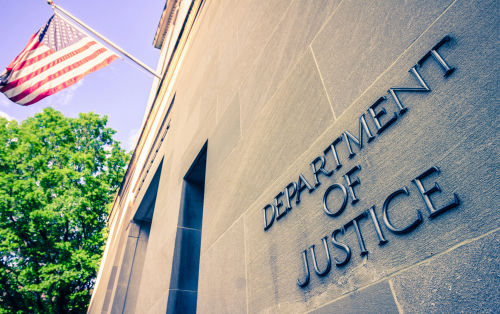
A $1.776 billion Justice Department fund meant to fight “weaponization” of government is now sparking alarms from conservatives who see a murky structure, weak oversight, and plenty of room for abuse.
How Trump’s “Anti‑Weaponization” Fund Came To Be
President Trump’s Justice Department is moving ahead with a $1.776 billion “anti-weaponization” fund as part of a settlement to end his $10 billion lawsuit against the Internal Revenue Service and Treasury Department over leaked tax records.[3] Money would come from the Treasury Department’s Judgment Fund, a standing pot of taxpayer dollars that the executive branch can tap to pay court judgments and settlements without a fresh vote from Congress.[1][3] That structure is technically legal but politically explosive because lawmakers never voted directly on this specific program.
Reporting describes the fund as the core trade: Trump drops his tax-leak suit, along with $230 million in civil claims tied to the Russia investigation and the 2022 search of Mar‑a‑Lago, and Justice creates a large pool to compensate people who say they were targeted by the Biden administration.[3][4] Trump himself reportedly cannot collect directly on those dropped claims, though entities linked to him are not automatically barred from filing.[3] Critics in both parties argue that arrangement blurs the line between personal grievance and public money.
Five‑Person Commission, Massive Discretion, Thin Oversight
The Justice Department says payouts will be decided by a five‑person commission, with four members chosen by Acting Attorney General Todd Blanche and a fifth selected in consultation with Congress.[3] The president can remove commissioners without cause, giving the White House sweeping control over who sits on the panel.[3] Reports also say the commission is under no clear obligation to disclose how it decides awards, leaving taxpayers in the dark about who gets paid and why.[3][4]
Senator Bill Cassidy, a Republican from Louisiana, warned that ordinary Americans are worried about gas, groceries, and mortgages, not “putting together a $1.8 billion fund for the president and his allies to pay whomever they wish with no legal precedent or accountability.”[1] Cassidy argued that if there is a legitimate settlement to be made, it should be brought to Congress for approval, not quietly routed through an executive‑branch slush fund.[1] That criticism goes beyond Trump himself and speaks to a broader concern about any president wielding nearly two billion dollars with limited checks.
Secrecy Around Rules And Eligibility Fuels Conservative Skepticism
Senate reports say the actual bill text and settlement language had not been released publicly when Republicans were briefed, meaning senators were asked to accept the concept before seeing the fine print.[3] Without a written rulebook, no one outside the administration can say for sure who qualifies, what proof is required, or whether people who lost in court—or never had a case—could still collect.[1][3] That secrecy is exactly what feeds distrust among conservatives who already see a pattern of backroom deals and bureaucratic games.
Some Republican senators are now pushing for statutory guardrails, including clear exclusions for violent offenders and stricter reporting requirements for the commission.[1][2] Senate Majority Leader John Thune said the Justice Department will need to establish “guardrails” to calm concerns inside the conference.[1] Others are asking whether the administration is using the Judgment Fund, designed for normal settlements, as a way to bypass the constitutional power of the purse that belongs to Congress. Until the text is public, critics argue, the line between legitimate claims and political payouts remains disturbingly vague.
Delay In Border‑Security Votes And A New Lawsuit Over Extremist Payouts
Because of unresolved questions surrounding the anti‑weaponization fund, Senate Republicans have delayed a major vote to fund immigration and border‑security agencies, including Immigration and Customs Enforcement and Customs and Border Protection.[2][3] Reporting says plans to advance a $70 billion immigration bill were effectively “punted” after a closed‑door meeting with Blanche, as members refused to move forward without tightening language around the fund.[2][3] That delay frustrates conservatives who want tougher enforcement but do not want to rubber‑stamp a massive, opaque payout program.
GOP SENATORS REBEL AGAINST TRUMP, DELAY KEY VOTE OVER $1.8B 'ANTI-WEAPONIZATION' FUND
Senate Republicans derailed a vote on immigration crackdown funding, furious over a DOJ push for a fund to pay alleged victims of political persecution. Tensions flared as acting AG Todd…
— STOCK DUTY (@stock_duty) May 22, 2026
At the same time, a group of United States Capitol Police officers who defended the Capitol on January 6 has filed a federal lawsuit seeking to block the fund, arguing it could end up compensating extremists convicted of violent crimes.[1] Their case adds a new layer of constitutional concern: whether taxpayer money might be steered to people found guilty of attacking law enforcement and the democratic process. For many on the right, that possibility violates basic notions of justice, law and order, and respect for those who wear the badge.
What Conservatives Should Watch For Next
For constitution‑minded conservatives, the core issue is not whether past weaponization should be addressed—many Americans believe federal agencies under Democrats targeted political enemies—but how it is being done. A nearly $1.8 billion fund controlled by political appointees, hidden rules, and minimal congressional input raises serious questions about executive overreach, transparency, and respect for taxpayers’ hard‑earned dollars.[1][3] Until the settlement text, eligibility standards, and audit mechanisms are fully public, skepticism is not only understandable; it is prudent.
Sources:
[1] Web – GOP senators balk at Trump’s $1.8-billion ‘anti-weaponization’ fund …
[2] YouTube – Senate GOP delays vote to fund immigration agencies amid DOJ …
[3] Web – Senate goes on break amid GOP plan to curtail Trump ‘anti …
[4] YouTube – House bill would ban use of federal money for DOJ’s “anti …