
A Hiroshima bomb survivor uncovered the suppressed truth that 12 American POWs died in the U.S. atomic blast he survived, forcing governments to confront an inconvenient reality before his own death at 88.
Mori’s Survival and the Hidden POW Tragedy
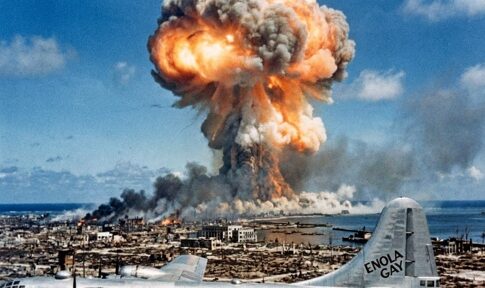
On August 6, 1945, Shigeaki Mori stood 1.5 miles from Hiroshima’s hypocenter when the U.S. dropped the “Little Boy” atomic bomb. The 8-year-old witnessed the mushroom cloud and drank radiation-tainted water, surviving amid devastation that claimed about 140,000 lives by year’s end. Unknown to planners, 12 American airmen, shot down over the area on July 28 and held as POWs in the city, perished in the blast. Both governments suppressed this detail to protect strategic decisions and POW locations elsewhere.
My heartfelt condolences to the family of Hiroshima hibakusha Shigeaki Mori, who passed away at the age of 88. Mori-san dedicated decades of his life to researching and honoring American prisoners of war who died in Hiroshima in August 1945. His work to identify 12 American POWs… pic.twitter.com/My3v8weojg
— ジョージ・グラス駐日米国大使 (@USAmbJapan) March 18, 2026
Decades of Dogged Research Amid Official Silence
Mori launched his investigation in the 1960s after a university professor handed him a list of names from Japanese archives. Working full-time, he scoured records for 50 years, confirming the airmen’s fates through declassified U.S. documents. Postwar silence from Washington and Tokyo buried the story, prioritizing victory narratives over uncomfortable truths. Mori’s shock at these unacknowledged American deaths drove him, echoing his belief that war strips humanity from all sides. His efforts bridged hibakusha survivor identity with historian rigor.
Book Publication and Path to Presidential Recognition
In 2008, Mori published “A Secret History of U.S. Servicemembers Who Died in Atomic Bomb,” winning Japan’s prestigious Kikuchi Kan Prize. The book detailed the airmen’s capture, imprisonment, and deaths, challenging official histories riddled with omissions. He contacted families of the 12, delivering closure through personal letters. This culminated in 2016 when President Obama, the first sitting U.S. leader to visit Hiroshima, name-checked the POWs in a speech on reconciliation and embraced Mori publicly. That moment validated decades of solitary pursuit.
Obama’s gesture aligned with common sense accountability: governments err, but truth honors the dead regardless of flags. Mori’s work strengthens conservative values of duty to fallen warriors, even those lost in allied actions.
Legacy of Reconciliation After Mori’s Death
Mori passed away on March 14, 2026, at a Hiroshima hospital, age 88, as confirmed by Japanese media and his publishers. Obituaries in Army Times, Stars and Stripes, and AP outlets recapped his quest, reviving awareness of the POWs. His prior words ring true: research focused on human beings, not enemies. Mori’s legacy endures through his book’s English translation, Hiroshima memorials, and amplified anti-nuclear voices. Families gained peace; peace activists found a model of cross-enemy humanity.
Short-term, his death sparked media interest in Hiroshima visits. Long-term, it bolsters U.S.-Japan ties by equating losses, setting precedent for admitting collateral Allied deaths without diminishing victory’s necessity against Japan’s refusal to surrender.
Sources:
Hiroshima survivor who spent decades investigating American POW deaths dies at 88
Hiroshima survivor who spent decades investigating American POW deaths dies at 88
Shigeaki Mori, Hiroshima atomic bomb survivor and historian embraced by Obama, dies at 88
Shigeaki Mori, Hiroshima atomic bomb survivor and historian embraced by Obama, dies at 88
Shigeaki Mori, Hiroshima atomic bomb survivor who researched U.S. POW deaths, dies at 88
Shigeaki Mori, Hiroshima atomic bomb survivor embraced by Obama, dies at 88